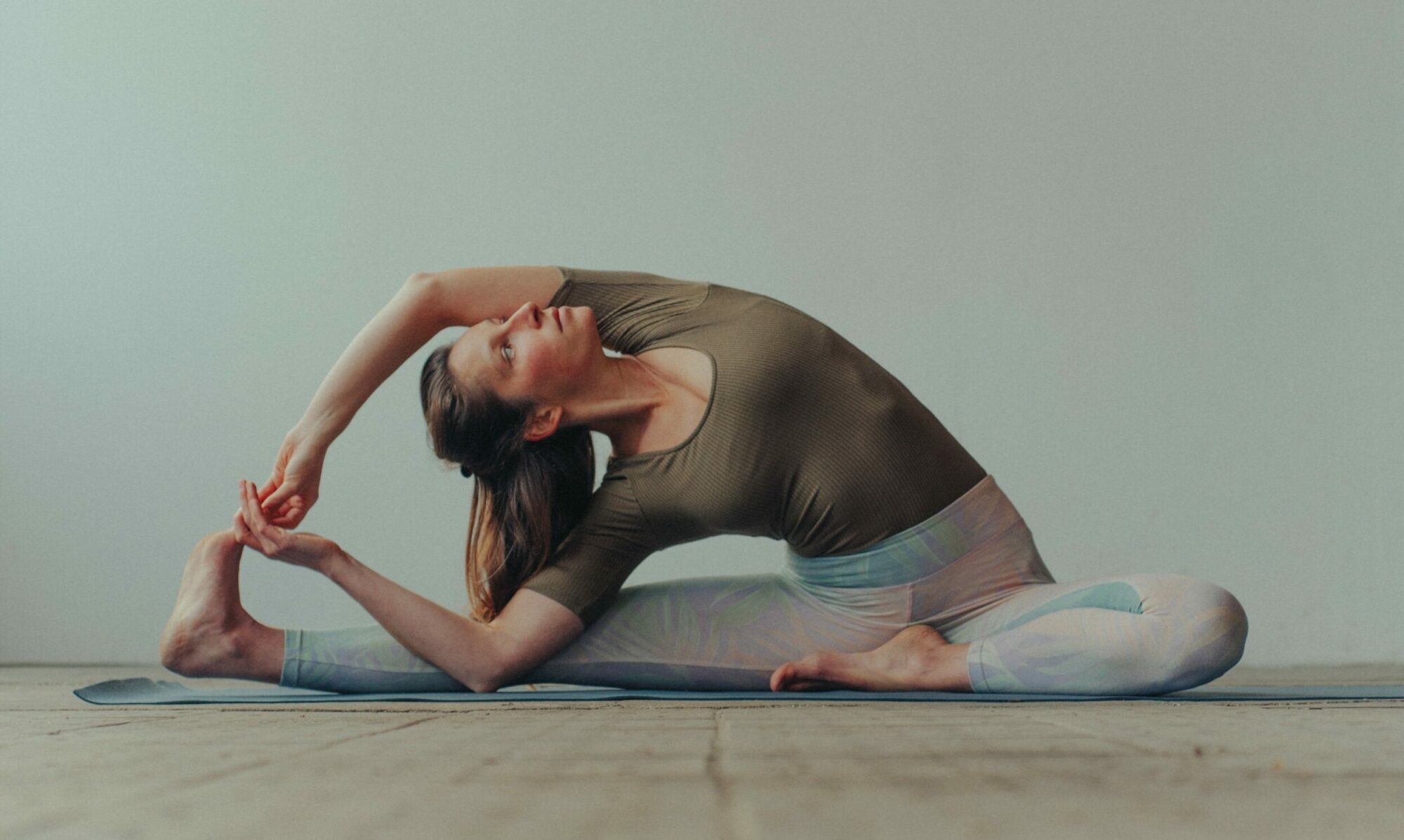
The development of modern yoga, as we generally know the physical exercises of yoga today, began in India at the end of the 19th to the beginning of the 20th century.
Until then, yoga exercises in India were anything but accessible to the general population. According to tradition, they were practiced by individual ascetics in caves, hermitages or ashrams as part of their spiritual studies.
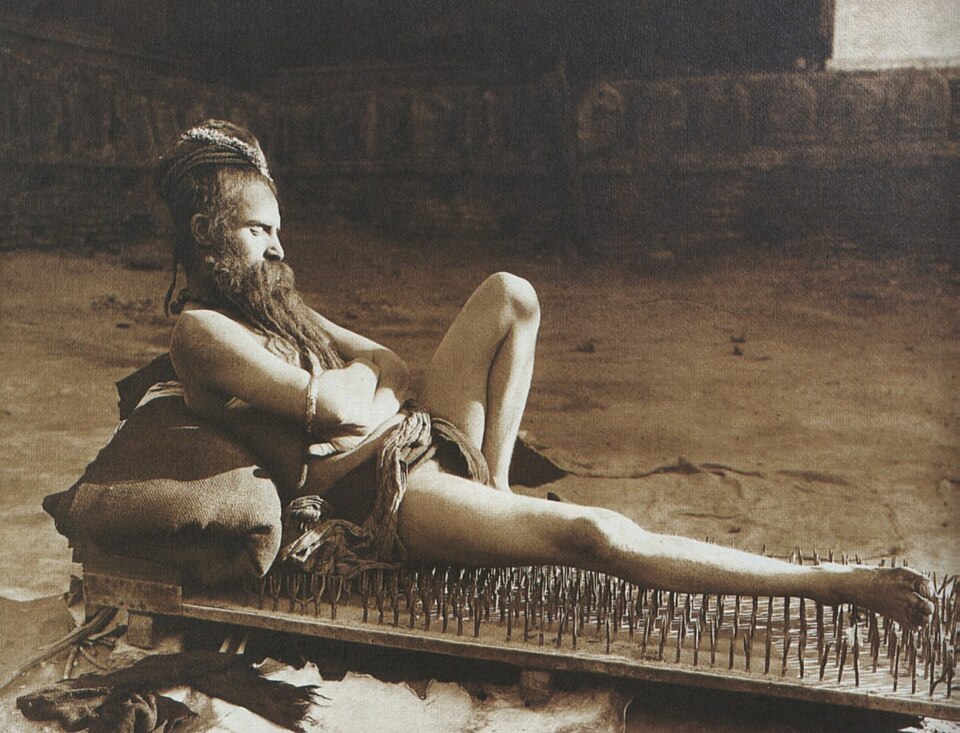
Fakirs were seen in public showing off their skills. However, these were considered dubious and were frowned upon.
It is interesting for our consideration how the ascetics dealt with the body. In their various disciplines, they aimed to deaden bodily sensations and develop supernatural abilities to control the body and its organ functions, such as the voluntary stopping of the heart and much more.
The classical yoga exercises did not have a good reputation in India at this time and they were already being practiced at the turn of the century, but very sporadically. However, the time seemed ripe to make yoga exercises accessible to the general population. The interest in physical training was not only very popular in Europe, but also in India. Various types of gymnastics for men, more in the sense of military physical education and bodybuilding and martial arts, as well as women’s gymnastics with a rhythmic character and dance were flourishing.
Here it is interesting to explore what role the classical yoga exercises played and how they ultimately became a popular sport. A broad area of research will focus on the question of what was actually passed down from Indian culture and what part the Western influences of gymnastics and military physical education, which were also popular in India, played in this innovation. Bodybuilding and wrestling were also very widespread in India and, according to the studies, are also an area of influence of modern yoga.
History shows how the currents of India and Europe intermingled and fertilized each other. No wonder, since the British occupied India (the colonial period lasted from 1756 to 1947) had promoted a lively cultural exchange between the continents.
In this discussion, it becomes clear that the new form of modern yoga emerged from various influences in India and from there spread throughout the world.
From asceticism to social skills
Sri Yogendra (1897-1989) and Sri Kuvalyananda (1883-1966) were the first to pioneer the spread of modern yoga and also founded their own institutes. Both focused on researching and applying the healing effects of yoga asana and pranayama. Thus yoga therapy was born.
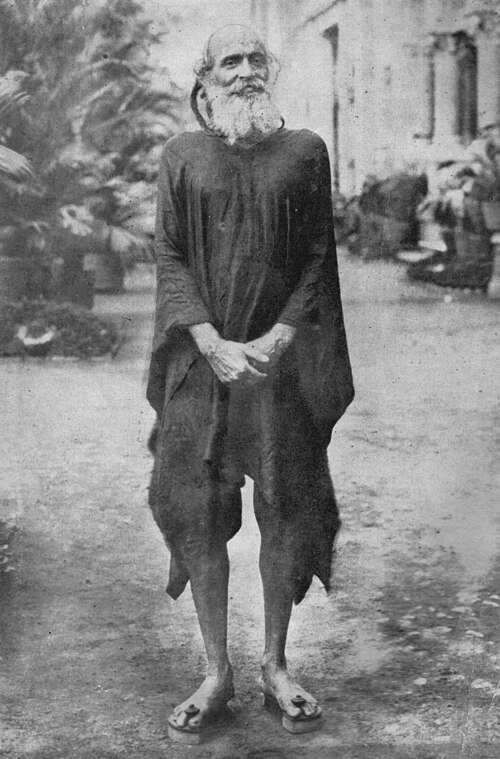
Interestingly, both were independent disciples of Paramhansa Sri Madhavdasji Maharaj (1798-1921). He was 123 years old (!) and ran an ashram in Malsar in Gujarat. Although he was very traditional on the one hand, it is reported that he was also very modern and open-minded. For example, he organized an all-India sadhu congress in 1909 to renew the order of hermits. He also spent many decades traveling throughout India to learn and spread yoga. The “spiritual upliftment of the masses” was his goal
Sri Yogendra
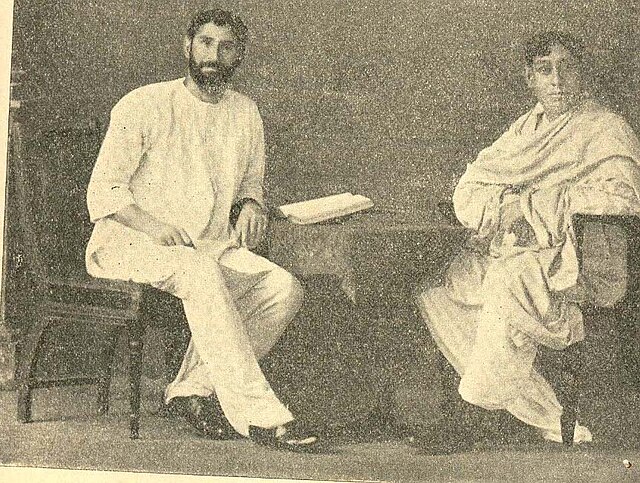
Sri Yogendra had practiced wrestling, various martial arts and gymnastics for many years before he became acquainted with hatha yoga exercises.
He met his spiritual teacher in 1916 in Bombay as a student at the age of 19. His teacher Paramhansa Sri Madhavdasji Maharajwarwas 118 years old at the time (!) He stayed in his ashram in Malsar for 2 years, where he studied the holy scriptures and hatha yoga exercises.
In 1918, he opened his “The Yoga Institute” near Bombay.
In 1919, he went to New York for four years, founded a yoga school there in 1920 and treated sick people with yoga exercises there as well as in India.
In 1922, he returned and devoted himself extensively to researching classical yoga. He sought ways to make these findings practically available for a contemporary and holistic development of the personality, as well as yoga therapy that could be applied in everyday life. His aim was also to scientifically underpin the yoga exercises and put them at the service of psychosomatics and yoga therapy for the general population.
The Yoga Institute near Bombay was relocated to Santa Cruz (also near Bombay) in 1948 and still exists today.
Sri Yogendra became one of the outstanding pioneers of modern yoga.
An account of his life and work can be found here:
Sri Kuvalyananda – Lonavla
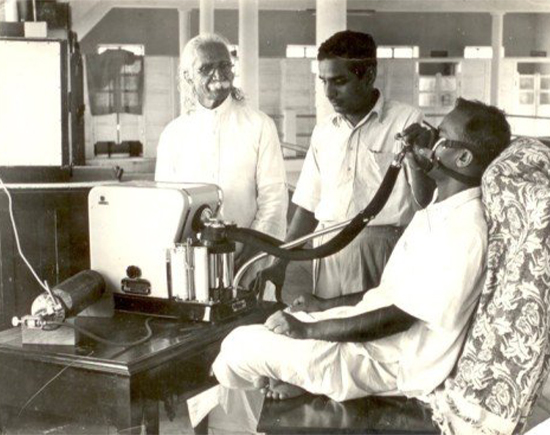
As a student in Baroda from 1907 to 1919, Sri Kuvalyananda studied a variety of martial arts, gymnastics and yoga. He published his first yoga book in 1917.
Only then did he meet Paramhansa Sri Madhavdasji Maharaj and study with him.
From 1920, yoga became his main field of activity and research. As he could not find any literature on the healing effects of yoga, he began to conduct his own experiments.
In 1924, he founded the Kaivalyadhama Institute in Lonavla, which is still famous today. There he researched the physiological effects of yoga exercises, initially on pranayama, then increasingly on the physical exercises themselves. He published the journal Yoga Mimamsa and was everything in one person: tireless researcher, teacher, editor, he did public relations work and met well-known personalities such as Mahatma Gandhi and Jawaharlal Nehru. Then began a new era in which students from all over the world from different universities came to him, as he insisted that the research should be done in India and not in other continents.
Through his tireless work, he not only promoted the widespread practice of yoga exercises among the population, but also ensured that yoga exercises have since been regarded as therapy. He became internationally renowned.
Tirumalai Krishnamacharya
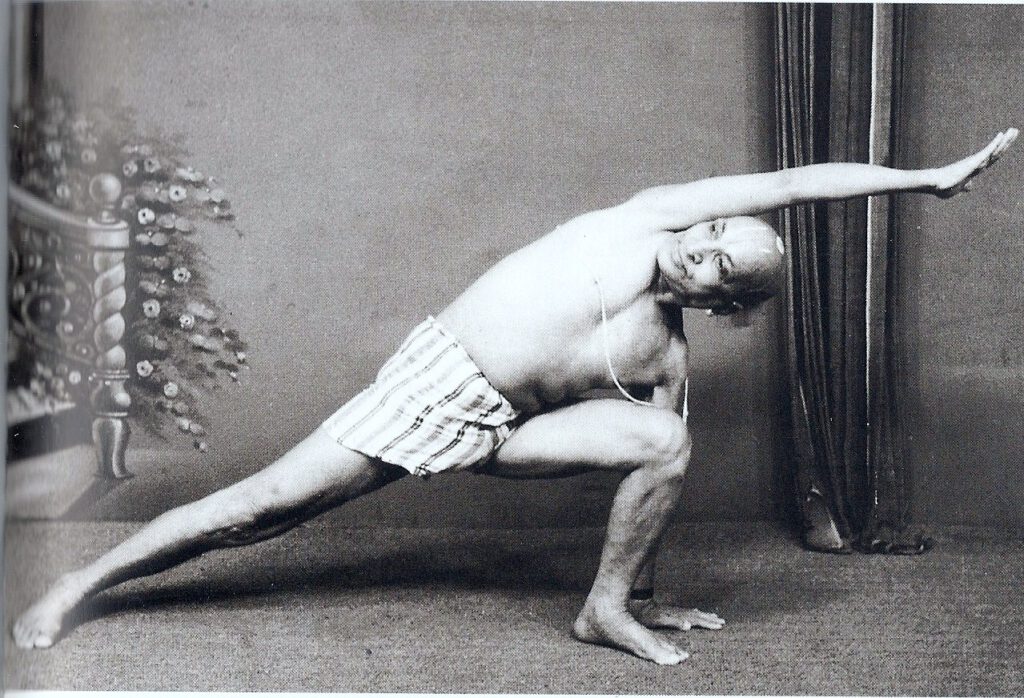
In the West, Tirumalai Krishnamacharya (1888-1989) is described as the main pioneer in India, the father of modern yoga. However, he came somewhat later.
He was entrusted with the task of teaching yoga at his palace by the Maharaja of Mysore, who ran a nationwide center of Indian physical training, only in 1931/33. He was to emphasize Yogaasana as a system rooted in India and thus promote the national pride of the Indians and integrate it into the modern established physical training systems. For this purpose, he visited Sri Kuvalyananda at his research center in Lonavla, for example.
His fame in India and the West relates to different characteristics, as in India he is known as a wise scholar of the scriptures and a great healer. In the West, however, he is known as the pioneer or father of modern yoga. Two globally popular yoga styles, Ashtanga Yoga by Pattabhi Jois and Iyengar Yoga, have emerged from his work. His student Indra Devi became famous in the USA with Viniyoga.
However, Sri Kuvalyananda and Sri Yogendra had already begun to make a major contribution to the spread of yoga practices in India 10-12 years earlier.
Continue to page: Tirumalai Krishnamacharya – a famous personality
Bildquellen
- 960px-Fakir_on_bed_of_nails_Benares_India_1907: Herbert Ponting, Gemeinfreiheit, via Wikimedia Commons | Public Domain Mark 1.0
- Paramahamsa_Madhavdasji: Wikimedia Commons | Public Domain Mark 1.0
- Shri_Yogendra_with_Dr._Surendranath_Dasgupta_in_1924: https://commons.wikimedia.org/wiki/File:Shri_Yogendra_with_Dr._Surendranath_Dasgupta_in_1924.jpg | Public Domain Mark 1.0
- scientific-kuvalaya: Bildrechte beim Autor | All Rights Reserved
- krishnamacharya_side_angle: Bildrechte beim Autor | Public Domain Mark 1.0


